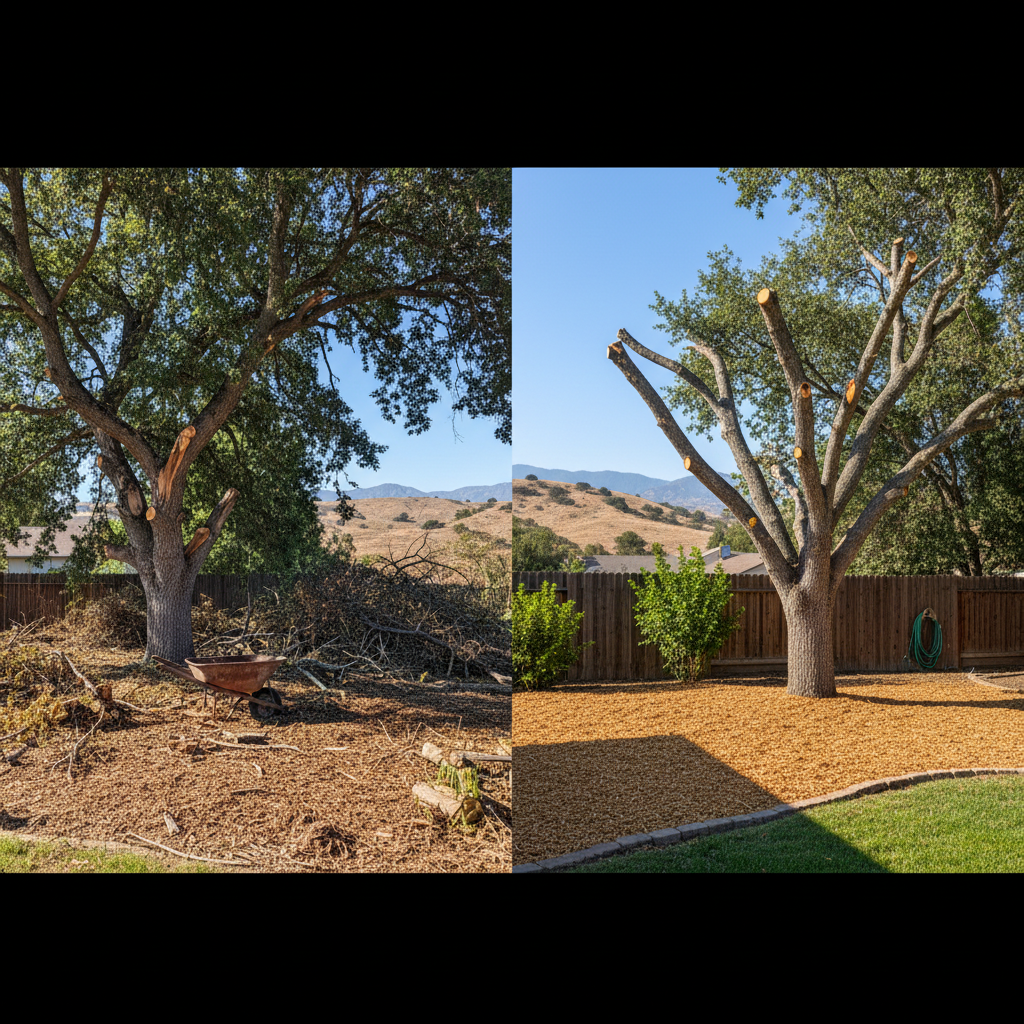
Got a big tree in your yard that's maybe a little too big? Or maybe it's just looking a bit unruly, blocking a view, or getting too close to your house or power lines. I see it all the time here in Atwater, especially with those older oaks in the Applegate area that have really spread out over the years. When it comes to getting that tree under control, you've basically got two main paths: topping or proper, skilled pruning. And let me tell you, they're not the same thing.
What's 'Topping' Anyway?
Topping is exactly what it sounds like: cutting off the entire top of a tree, or cutting back large branches to stubs without regard for where the new growth will come from. People often do it because they think it's a quick fix for a tree that's too tall or too wide. They want to reduce the size dramatically, right now.
The Downside of Topping: It's a Bad Idea, Period.
- It's an injury, not a haircut: When you top a tree, you're creating huge wounds that struggle to heal. These open wounds are like welcome mats for insects, fungi, and diseases. I've seen countless trees around here decline rapidly after topping.
- Weak, ugly regrowth: The tree will try to recover by sending out a bunch of fast-growing, weak shoots right below the cuts. These shoots, often called 'water sprouts,' are poorly attached and much more likely to break off in a strong wind – something we definitely get here in the Valley. So, you end up with a tree that looks like a hat rack and is actually more dangerous.
- Starvation and stress: Trees need their leaves to make food. When you lop off a huge portion of the canopy, you're essentially starving the tree. It puts a massive amount of stress on it, often leading to a slow, painful death.
- More expensive in the long run: You might think topping is cheaper upfront, but you'll either pay more to have those weak, ugly sprouts constantly trimmed, or you'll pay to have a dead or dying tree removed entirely a few years down the road.
The Right Way: Proper Pruning (Crown Reduction & Thinning)
Proper pruning, on the other hand, is an art and a science. It's about understanding how a tree grows and making strategic cuts that benefit its health, structure, and appearance. When a tree needs to be made smaller, we call it 'crown reduction' or 'thinning.'
How Proper Pruning Works:
- Strategic cuts: Instead of just chopping, we identify specific branches to remove or shorten. Cuts are made back to a lateral branch that's at least one-third the diameter of the branch being removed. This encourages healthy, strong growth and proper wound closure.
- Maintains tree structure: We aim to keep the tree's natural shape and strength. This means removing dead, diseased, or crossing branches, and selectively thinning the canopy to improve light penetration and air circulation.
- Reduces size safely: If a tree is too big, crown reduction carefully lowers the height or spread by cutting back to appropriate lateral branches. It's a gradual process that respects the tree's biology.
- Healthier, more durable tree: A properly pruned tree is less stressed, more resistant to pests and diseases, and structurally sound. It looks better, too.
- Long-term value: While good pruning might cost a bit more upfront than a quick topping job, it's an investment in your tree's health and longevity. You won't have to deal with constant regrowth issues or premature removal.
Cost, Durability, and Appearance
Let's break it down simply:
- Cost: Topping might seem cheaper initially, but proper pruning saves you money in the long run by preventing future problems. Think of it as preventative maintenance versus emergency surgery.
- Durability: Topped trees are weak and prone to failure. Properly pruned trees are stronger and more resilient, especially against our occasional windstorms.
- Appearance: A topped tree looks butchered and unnatural. A properly pruned tree maintains its beauty and natural form.
Look, I get it. You want your trees to be safe and look good. As someone who's been working with trees for years here at Coastal Tree, I've seen the consequences of topping firsthand. It's almost never the answer. If you've got a tree that needs attention, don't let someone convince you that topping is the way to go. Invest in proper pruning; your trees, and your wallet in the long run, will thank you for it.