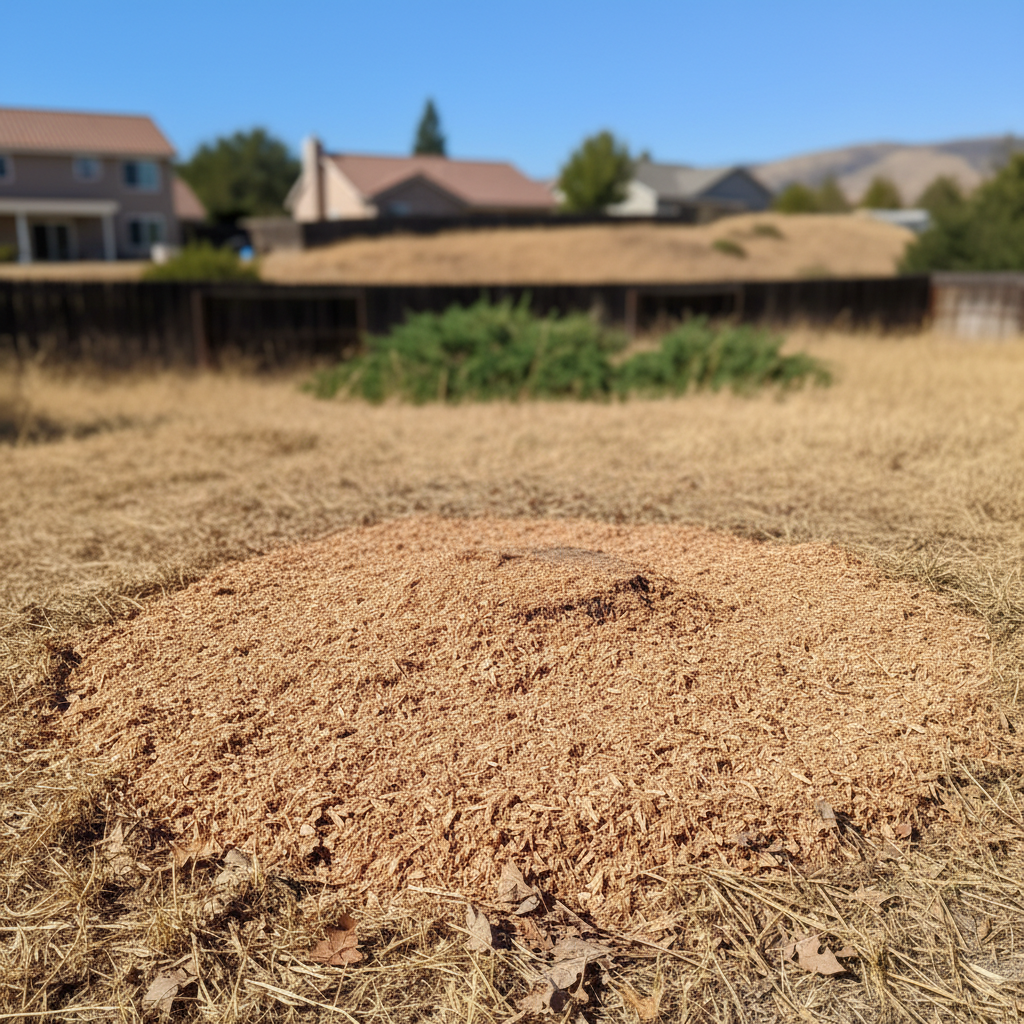
Alright, let's talk stumps. You've had a tree cut down, maybe years ago, and now you're left with this big, ugly, trip-hazard of a stump. Or maybe you just bought a place in one of those older Atwater neighborhoods, like near Ralston Park, and there's a relic from a previous owner's tree right in the middle of your future garden spot. You've probably got questions, and that's good. I hear 'em all the time. Here are the most common ones I get asked about stump grinding and removal.
Do I really need to remove that stump? Can't I just leave it?
You can, but I wouldn't recommend it. Leaving a stump in your yard is like leaving a welcome mat out for problems. First off, it's an eyesore. It breaks up the clean lines of your lawn, and you're constantly mowing around it. Then there's the trip hazard, especially if you've got kids or grandkids running around. Beyond that, stumps attract pests. Termites, carpenter ants, beetles – they all love decaying wood. You don't want those critters setting up shop in your yard and then deciding your house looks like a tasty next meal. Plus, a stump can keep sprouting. You'll get these annoying suckers popping up around it, trying to grow a new tree, and you'll be constantly cutting them back. It's just a headache you don't need.
What's the difference between stump grinding and stump removal?
This is a big one, and people often use the terms interchangeably, but they're not the same. When we talk about stump grinding, we're using a specialized machine with a rotating cutting wheel that grinds the stump down into wood chips. We usually go about 6 to 12 inches below grade, sometimes more if you're planning on planting something big there. The main roots are left in the ground to decay naturally. It's faster, less invasive, and generally more affordable. You're left with a pile of wood chips and a hole that you can fill with soil and reseed or plant over.
Stump removal, on the other hand, means getting the entire stump and all the major roots out of the ground. This often involves heavy machinery, digging, and can be a much bigger job. It's usually only necessary if you're planning to build something directly on top of where the stump was, or if you're worried about specific root diseases spreading. It's more disruptive to your yard and costs a lot more. For most homeowners, grinding is the way to go.
How deep do you grind the stump?
Typically, we grind stumps down anywhere from 6 to 12 inches below the surrounding soil level. For most situations – like putting down new sod, planting grass, or even a small shrub – 6 to 8 inches is plenty. If you're planning on putting in a new tree or something with deeper roots right in that spot, we can go deeper, sometimes 12 to 18 inches. Just let us know your plans, and we'll make sure we grind it to the right depth for your project. We don't want you hitting a hard spot when you're trying to dig later.
What happens to the roots after grinding?
When we grind a stump, we're only getting the main visible part and the top few inches of the major roots. The rest of the root system is left underground. Don't worry, though; they'll naturally decompose over time. This process can take several years, depending on the size of the roots and the type of tree. As they decompose, they add organic matter back into the soil. You might notice a slight settling of the ground in that spot as the roots break down, but it's usually not a big deal. Just fill it in with a little more soil if it happens.
What do I do with all the wood chips?
After grinding, you'll have a pile of wood chips mixed with some soil. You've got a few options. We can haul them away for you, which is an extra charge, but it means a clean slate. Or, you can keep them! They make great mulch for garden beds, pathways, or around other trees and shrubs. They help retain moisture, suppress weeds, and slowly break down to enrich your soil. Just don't put them back into the hole where the stump was if you're trying to plant grass there, as they can interfere with new growth.
How much does stump grinding cost in Atwater?
This is the question everyone wants to know, and honestly, it varies. It's not a one-size-fits-all answer. The cost depends on a few factors: the diameter of the stump (measured at its widest point, usually at ground level), the type of tree (some wood is harder to grind than others), how deep you need it ground, and the accessibility of the stump. If it's in a tight spot, like between a fence and a shed, or on a steep slope, it's going to be more challenging and might cost a bit more because of the extra care and time involved. The best way to get an accurate price is to give Coastal Tree a call. We'll come out, take a look, and give you a fair quote. It's usually a lot less than you think, especially compared to the hassle of dealing with a stump yourself.
Can I just rent a grinder and do it myself?
You can, but I'd strongly advise against it for most homeowners. Stump grinders are powerful, heavy pieces of machinery. They've got sharp teeth, they throw debris, and they can be dangerous if you don't know what you're doing. I've seen people try to save a buck and end up with a trip to the emergency room or a damaged yard. Plus, renting one for a day, getting it to your house, learning how to use it safely, and then returning it often ends up costing you almost as much as just hiring a professional. We've got the right equipment, the experience, and the insurance to do it safely and efficiently. You just point to the stump, and we take care of the rest.
Getting rid of a stump is one of those things that just makes your yard look better and function better. Don't let it sit there. Get it handled, and enjoy your clean, clear space.