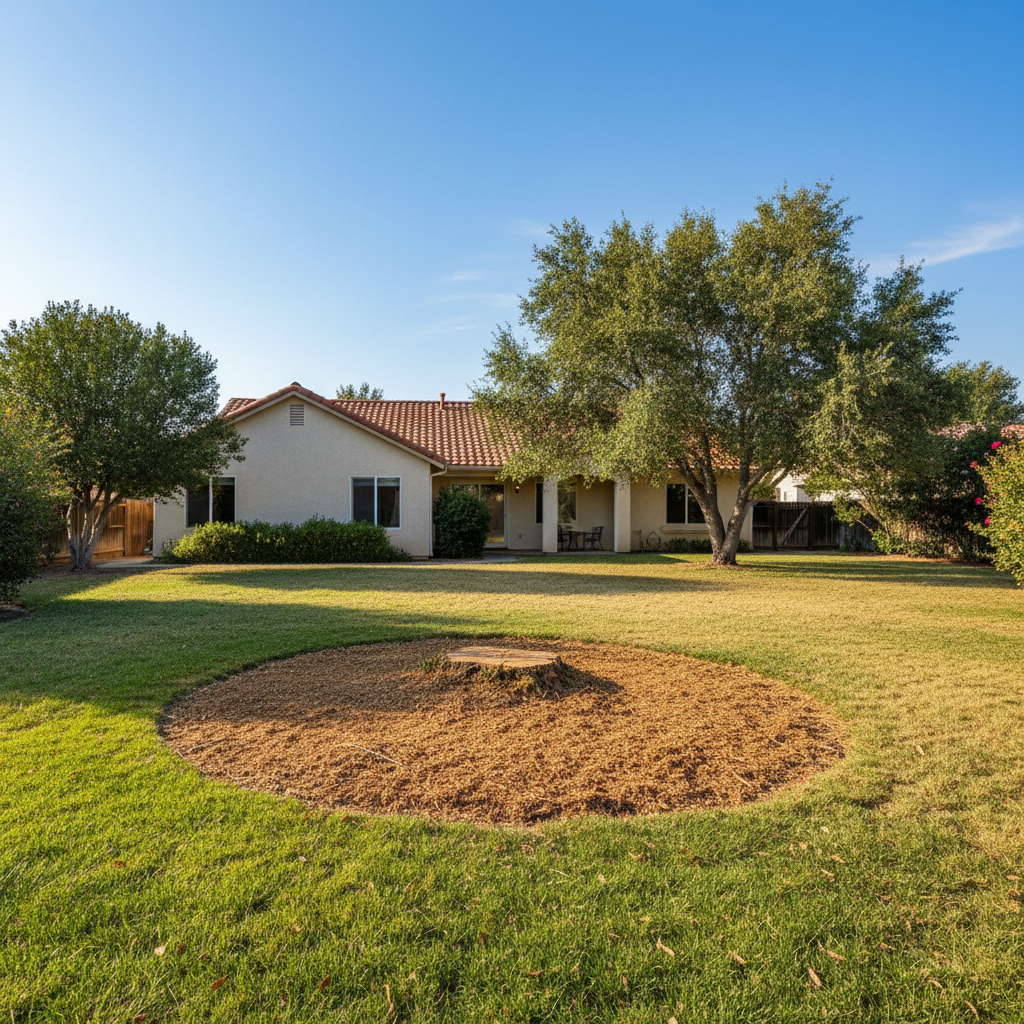
You've finally gotten rid of that old, ugly tree, but now you're staring at a stump. It's an eyesore, a tripping hazard, and it's probably messing with your landscaping plans. So, what's next? Stump grinding or removal, right? Sounds simple enough, but I've seen Atwater homeowners make some pretty common and costly mistakes when they're trying to tackle this.
Mistake #1: Not Knowing the Difference Between Grinding and Removal
This is a big one. A lot of folks use 'stump grinding' and 'stump removal' interchangeably, but they're not the same thing, and the difference impacts the cost and what you're left with. Stump grinding uses a big machine with a rotating cutting wheel to chew the stump down to below ground level. Usually, we go about 6-12 inches deep, turning the wood into a pile of chips. The roots are still there, just underground.
Stump removal, on the other hand, means getting the whole thing out – stump, major roots, everything. This is a much bigger job, often requiring heavy machinery, and it leaves a much larger hole in your yard. Most of the time, grinding is sufficient for homeowners who want to plant grass, put in a new shrub, or just get rid of the visible hazard. If you're planning to build a new structure right on top of where the stump was, then full removal might be necessary. Make sure you're clear with your contractor about which one you need, or you could end up paying for more or less than you expected.
Mistake #2: Not Asking About Underground Utilities
This is a huge red flag if a contractor doesn't bring it up. Before anyone starts digging or grinding, you absolutely, positively need to know where your underground utilities are. We're talking gas lines, water pipes, electrical conduits, communication cables. Hitting one of those isn't just expensive; it can be incredibly dangerous. In California, you call 811 a few days before you plan to dig. They'll come out and mark the lines for free. If a contractor says, "Nah, we'll be careful," or "We don't need to call 811 for a stump," walk away. Seriously. It's not worth the risk.
Mistake #3: Going with the Lowest Bid Without Checking Credentials
Everyone wants a good deal, I get it. But when it comes to something like stump work, the cheapest bid can often turn into the most expensive headache. Here's what you need to look for:
- Insurance: Are they fully insured? This means liability insurance in case they damage your property (or your neighbor's) and workers' comp in case one of their crew gets hurt. If they're not, you could be on the hook. Ask for proof, don't just take their word for it.
- Experience: How long have they been doing this? Do they specialize in stump work or is it just a side gig?
- References: Can they provide contact info for past clients? A reputable company like Coastal Tree will be happy to show off their work.
- Equipment: Do they have the right tools for the job? A small, underpowered grinder might take forever or not get the job done right, especially with a big, tough oak stump common in some older Atwater neighborhoods.
Don't be afraid to ask these questions. A good contractor expects them.
Mistake #4: Not Discussing the Cleanup Plan
After a stump is ground, you're left with a pile of wood chips mixed with dirt. What happens to that pile? Some contractors will leave it for you to deal with, others will haul it away. This needs to be part of your agreement. If they leave it, you'll have to figure out how to dispose of it or use it as mulch. If you want it gone, make sure that's included in the quote. Surprises after the work is done are never fun.
Mistake #5: Forgetting About the Roots (Even After Grinding)
Even after grinding, the roots of the tree are still in the ground. They'll eventually decompose, but it takes time. If you're planning to plant a new tree or a garden right where the old stump was, you might run into issues with the remaining roots. They can interfere with new plant growth or even cause sinkholes as they decay. If you're just putting down sod, it's usually not a big deal. But if you have specific planting plans, talk to your contractor about the best way to prepare the soil, or if full removal might be a better option for your long-term goals.
Getting a stump removed or ground doesn't have to be a hassle. Just do your homework, ask the right questions, and make sure you're working with a professional who knows what they're doing. It'll save you a lot of grief and money down the road.