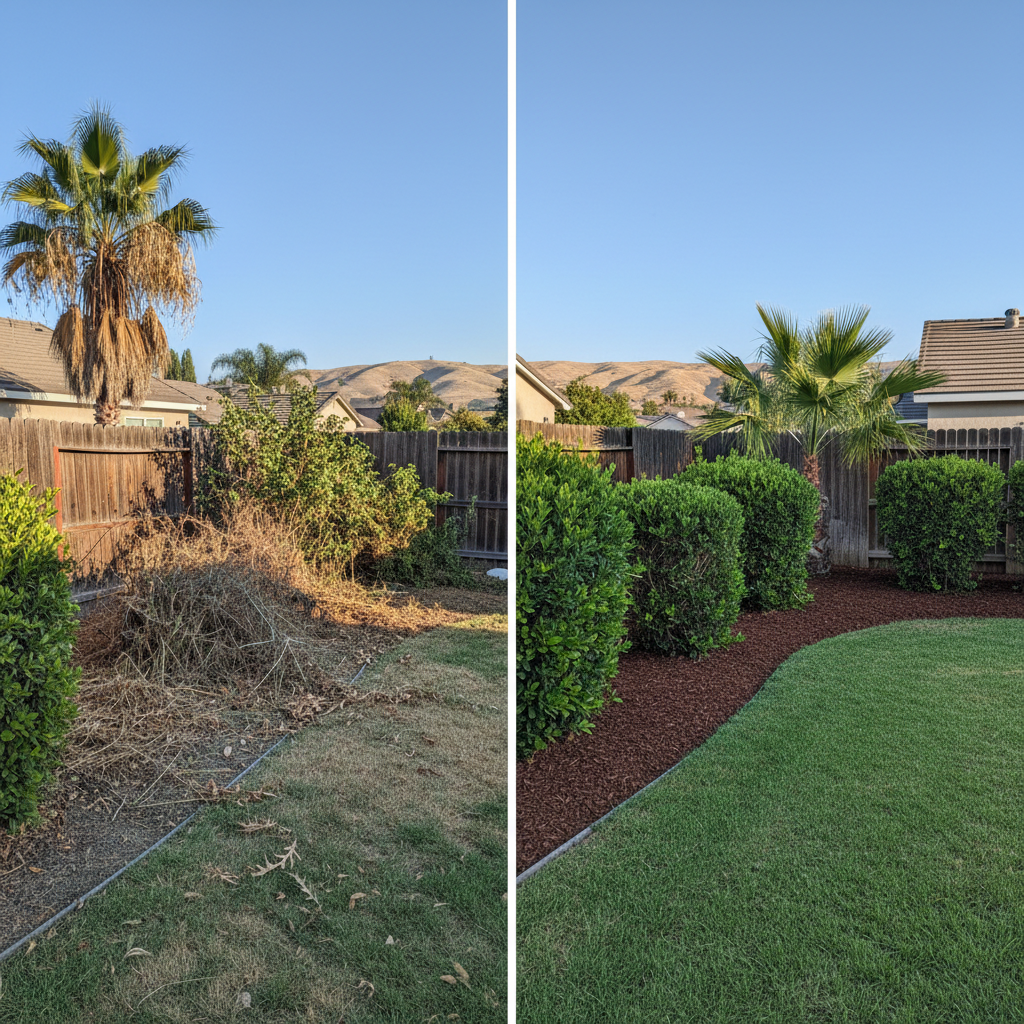
Alright, let's talk about those bushes and shrubs in your yard. You see them growing, getting a little wild, and you know they need a trim. But what's the best way to do it? I see a lot of folks around Atwater, especially in some of those older neighborhoods with the established landscapes, either going at it with hedge trimmers like they're sculpting a green brick, or just letting things go completely. There are really two main ways to approach this: shearing and selective pruning. And trust me, they're not the same.
Shearing: The Quick & Easy Trim
You know shearing when you see it. It's that uniform, often boxy or rounded look you get when someone takes a power hedge trimmer and just cuts everything back to a neat, even surface. It's fast, it's easy, and it gives you an immediate, tidy appearance. That's why a lot of landscape maintenance crews, especially for commercial properties or places that need a quick turnaround, opt for shearing.
Pros of Shearing:
- Speed: It's super quick. You can knock out a lot of shrubs in a short amount of time.
- Uniformity: If you want a perfectly straight hedge or a perfectly round bush, shearing delivers that clean, geometric look.
- Cost: Because it's fast, it's usually the cheaper option for a one-time service. Less labor, less cost.
Cons of Shearing:
- "Green Shell" Effect: This is the big one. When you shear, you're only cutting the outer layer of leaves and branches. Over time, this creates a dense, leafy shell on the outside, but the inside of the plant becomes bare, woody, and starved for light. It's like a plant wearing a thick coat – all the action is on the outside.
- Weak Growth: The new growth that comes after shearing is often weak and twiggy. It's forced to grow densely on the surface, making it more susceptible to pests and diseases because air circulation is poor.
- Increased Maintenance: That dense outer layer means the plant puts out new growth even faster, trying to get light. So, you'll need to shear more often to maintain that neat look. What seemed cheap upfront can become more expensive over the long haul with frequent visits.
- Unnatural Appearance: Unless you're going for a formal, geometric garden, sheared plants can look a bit unnatural and stiff.
- Plant Health: Long-term, it's not great for the plant. It stresses it out, reduces flowering and fruiting, and can shorten its lifespan. I've seen plenty of older ligustrum hedges around Atwater that are just hollow shells inside because they've been sheared for decades.
Selective Pruning: The Art of the Cut
Selective pruning, sometimes called hand pruning or structural pruning, is a totally different ballgame. Instead of just chopping the surface, you're looking at each branch and making intentional cuts. You're removing dead, diseased, or crossing branches, thinning out dense areas, and guiding the plant's natural shape. It's more like giving the plant a haircut than a buzz cut.
Pros of Selective Pruning:
- Plant Health: This is the best thing you can do for your plant's health. By removing weak or dead branches, you improve air circulation and light penetration, which reduces disease risk. It encourages strong, healthy growth from the inside out.
- Natural Beauty: It enhances the plant's natural form. Your shrubs will look more graceful, full, and vibrant, often with better flowering and fruiting.
- Reduced Maintenance (Long-Term): While it takes longer upfront, selective pruning encourages slower, stronger growth. This means you won't need to prune as frequently to maintain its shape and health. You're not constantly chasing new surface growth.
- Durability: Plants that are selectively pruned are generally stronger and more resilient, better able to withstand pests, diseases, and even our occasional Atwater windstorms.
- Better Airflow: Crucial for preventing fungal issues, especially with the humidity we can get after a good rain.
Cons of Selective Pruning:
- Time & Skill: It takes more time and requires a good understanding of plant growth and structure. You can't just go at it blindly.
- Higher Upfront Cost: Because it's more labor-intensive and requires skill, a selective pruning service will typically cost more per visit than a quick shear.
- Less Formal Look: If you absolutely need that perfectly straight hedge line, selective pruning won't give you that super crisp, artificial edge.
So, What Should You Do in Atwater?
For most homeowners in Atwater, especially if you care about the long-term health and beauty of your landscape, I'm going to tell you to go with selective pruning. Hands down.
Think about it: we've got some great plants that thrive here, but they need to be healthy to really shine. Whether it's your oleanders, pittosporum, or even those rose bushes, they'll look better, live longer, and flower more abundantly with proper pruning.
Yes, it costs a bit more upfront. But you're paying for expertise and a healthier plant. You won't be calling us at Coastal Tree every other month to hack back an overgrown, sickly bush. Instead, you'll have a beautiful, resilient plant that enhances your home's curb appeal for years.
If you've got a formal hedge that absolutely has to be a perfect rectangle, then a light shearing might be appropriate, but even then, I'd recommend incorporating some selective thinning from the inside every year or two to maintain the plant's health. Don't let your plants become hollow green boxes. Invest in their health, and they'll pay you back with beauty and less hassle in the long run.